
The right details,
in the right order.
Not a thicker binder. Twenty-four guides and ten tools that settle each call, then turn your answers into a plan your vendor team can run.
We can tell how the day goes
from the plan you hand us.
A three-inch binder, overpacked with detail, and still nobody can run the night from it.
Page one says the ceremony runs one way. Ten sheets later it runs another.
No one can tell which one is the right one, and the same issue pops up throughout the night, including design and styling. The detail was never missing. What was missing is the final decision called out clearly.
The expensive mistakes
don't feel like mistakes.
They feel like small decisions. The invoice is where you find out otherwise.
Your $10,000 catering quote is not a $10,000 expense.
Service charge and tax are layered on after the number you were quoted, routinely adding 20 to 25%. Whether gratuity is already inside that service charge depends on the contract, and every caterer writes it differently. Assume wrong and you either tip twice or not at all.
The RSVP chase alone
is an evening a week.
Tracking who replied, chasing who did not, then turning all of it into a table plan and a kitchen count.
We do it every day, so we built the doing of it into the tools.
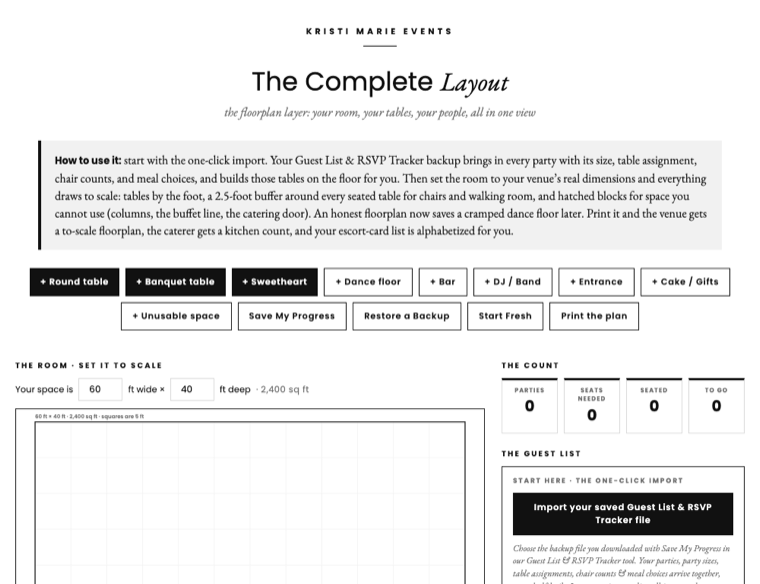
Pull your RSVP list straight into the layout tool, move the tables, set their real sizes, work out who sits next to who, then print it and hand it to your vendor team. Watch it happen →
Every call, already made
a thousand times.
Not instructions. The reasoning, so the decision is yours, the plan is solid, and the day it delivers is just like you pictured!
Planning it yourself, start to finish? This is built for exactly that.
Already working with a planner, or comparing vendor quotes on your own? Use it to check their math, and yours.
Then your day-of coordinator, and your vendor team, get something they can actually work from. Which is when you stop managing the day and start being in it.
Buy it. Follow it.
Use it. Planned.
Buy the binder.
One guide closes a gap you already know about. The whole binder builds the plan from nothing. Same planner behind both; only the scope changes.
Follow the guides.
Not instructions. The decisions a planner would make, and the thinking behind each one, so the call you make is yours and it still holds up.
Use the tools.
Guest count in, seating chart out. Your date in, the whole RSVP schedule out. Ten tools that do the sequencing and the drawing you were dreading. Watch one run →
You have your plan.
A timeline, a floorplan drawn to scale, an alphabetized escort list, a shopping list. Beautiful by default, printed, done.
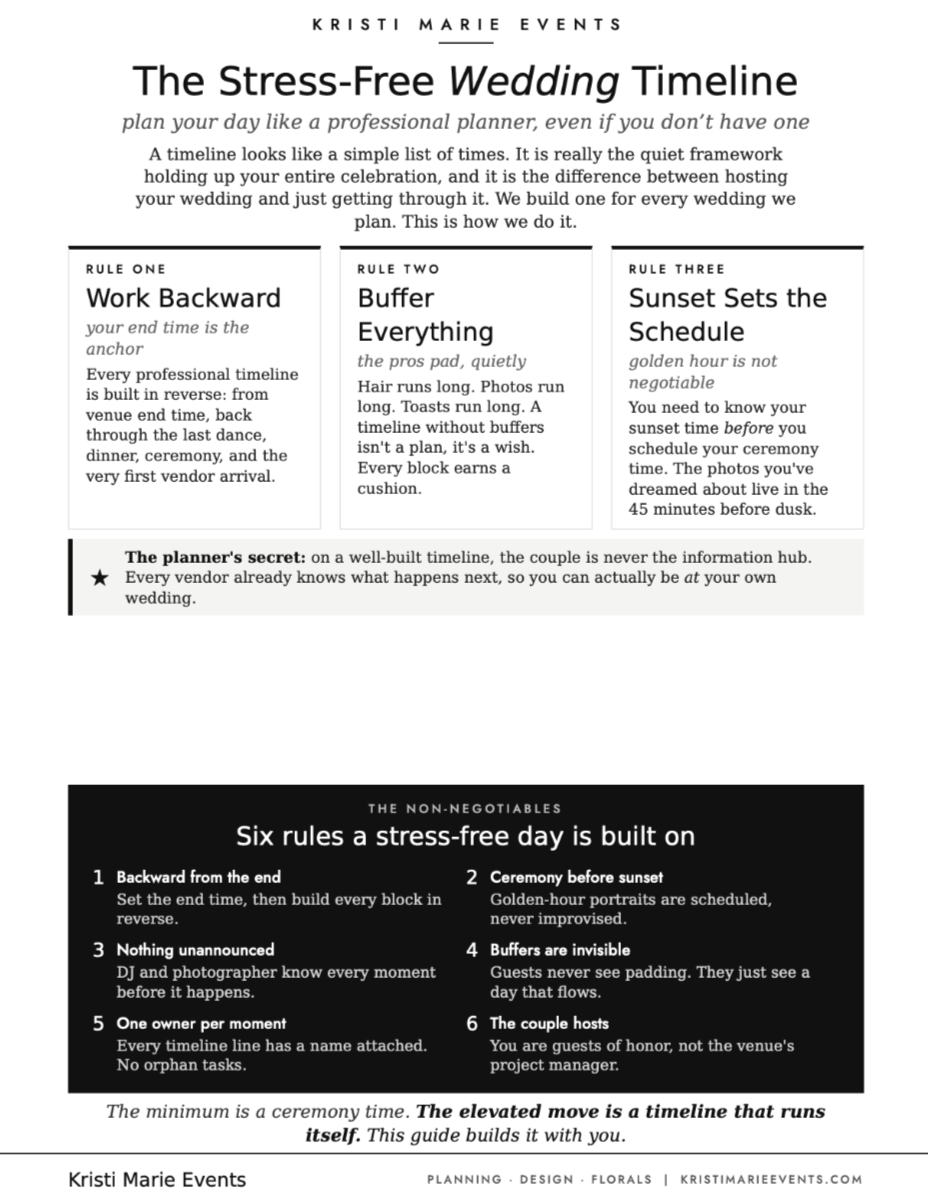
Page one of The Stress-Free
Wedding Timeline.
Three rules, named and argued. Three pages, and not one blank for you to fill in.
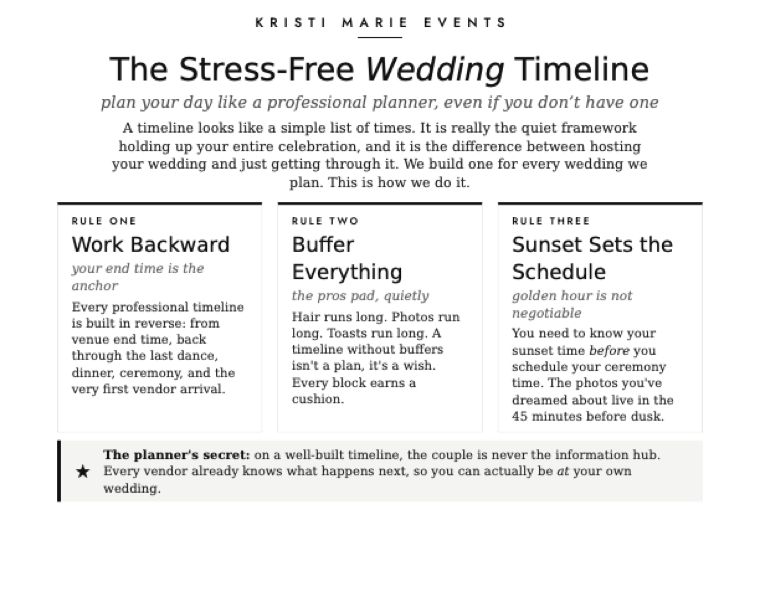
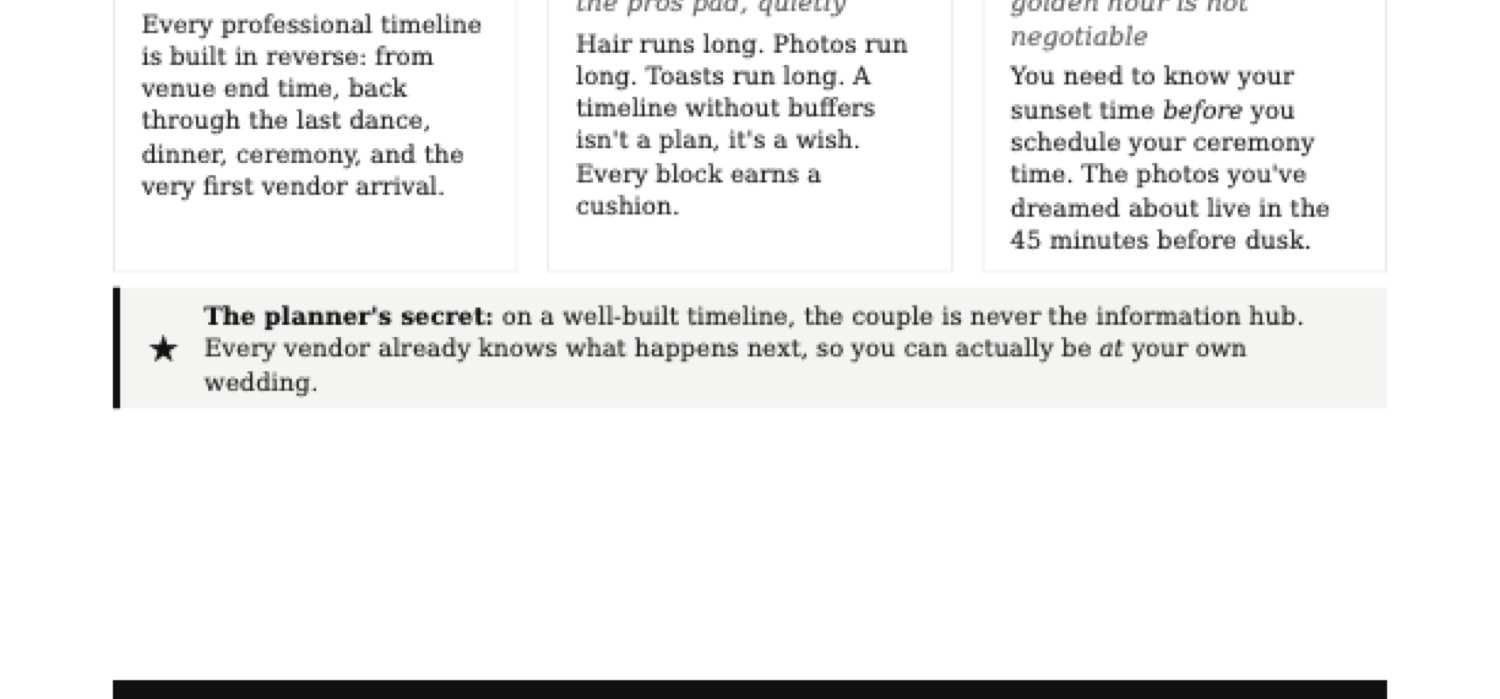
Work backward from your end time. Buffer everything. Let sunset set the schedule. Each rule is named, then argued, so the call you make is yours and you can say why you made it six months later.
Most samples show you a cover. Ours shows you the decisions we make, and why each one goes that way. Twenty-four guides, every one built like this.
$24 · three pages · instant download
Look inside any guide →Every part of the day,
decoded.
- 01 Plan the Day Every hour, mapped the way we actually run it: sunset, vendor windows, the buffers a planner pads in quietly. 10 piecesfrom $14
- 02 Planner's Math Bar counts, dance floor size, where the budget goes first. The numbers that quietly balloon, spelled out. 5 piecesfrom $14
- 03 Book the Team Which vendor to book first, and the questions that separate a great contract from a costly one. 6 piecesfrom $14
- 04 Create the List Guests, meals, addresses and tables, from the first invitation to a count that is actually real. 5 piecesfrom $14
- 05 Design the Room Linens, candlelight, signage, settled long before anyone starts unloading a van. 8 piecesfrom $14
- 06 The Systems The guide that explains one decision, paired with the tool that creates the plan. Nine dollars less than buying the two apart. 4 systemsfrom $39
- 07 The Journeys Bigger than a System: a full planning arc, threaded end to end. Nothing gets typed twice. 2 journeysfrom $109
Type a guest list.
Get the room.
Nothing gets typed twice. Ten tools, and each one hands off to the next.
- Your guest list, as the replies come in
- A meal choice here and there
- Your room's length and width
- The final yes-count, party by party
- A floorplan drawn to scale, buffers checked
- Every table assigned, chair counts checked
- The caterer's kitchen count, plating included
- Dietary flags, table by table
- The alphabetized escort list, print-ready
No accounts · No subscriptions · Saves to your device